Thursday, 24 February 2022

SENTENCE REARRANGING

 Question 1.

Extremely/a/grief/it/is/that matter/unkindly/animals/are/of exploited.

Ex: It is extremely a matter of grief, that animals are exploited unkindly.


(a) killed/they are/beaten/chained/and/mercilessly/trained.

(b) their/heed/but/hears/and/pays/nobody/to/cries.

(c) friends/auxiliaries/animals/necessary/are our/and/survival/for our

(d) animal/matters/our vision/a world/should be/where/welfare

Question 2.

Rearrange the following jumbled words/phrases to make meaningful sentences : (3 marks) (Board 2014, Set 8L1922Q)

(a) inside/grandeur/the palace hall/it was/all

(b) interwoven/pearls/were/flower garlands/sparkling/with

(c) wooden stage/painted backcloth/the/decorated/with a/was

Question 3.

certainly/the/laughter/is/medicine/best

Ex: Laughter is certainly the best medicine.


(a) ensures/life/it/longer/and/healthier/a

(b) laughter/fact/is/in/a/panacea/for/diseases/all.

(c) lowers/pressure/by/circulation/it/blood/increasing/blood

(d) a sense/and promotes/of/stress/well–being/laughter/decreases.

Question 4.England/good/many/lived/a/years/king/ago/wise/there/and/in Many years ago there lived a wise and good king in England.

(a) so much/man/his country/did/other/ever/for/for/as he/no/did

(b) the world/speak/Alfred/people/of/all over/the Great/now/as/him

(c) have/life/in/easy/those/did not/very/days/a/a king

5.stands/a/at/population/tiger/in/slim 1411/India/the/today The tiger population stands at a slim 1411 in India today.

(a) concemed/the/really/Indian/are/authorities

(b) tigers/the/of/population/falling/is/sharply

(c) considered/was/tigers,/Sariska,/for/sanctuary/a/which/tigers left/have/any/does not

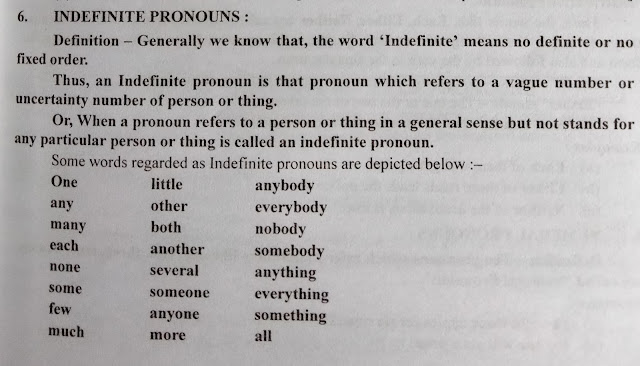
6.(a) teeth/one / the/neglected / of/body / the / are/of / most/parts

(b) brushing/teeth/remove/50%/your/webs/can/almost/of/dental

(c) good/and/oral/health/dental/hygiene/need/inculcated/to/at a nearly age/be

7.

(a) before/calculate/exams/the/number of/days/the

(b) for each/divide/the/days/of/number/subject

(c) day/each/number/subject/of/allot/for/the/chapters/per –

(d) and/notes/prepare/revise concepts/finally

8.(a) the Sandalwood/comes/oil/tree/the sandal/of Mysore/from

(b) of sandalwood/the commercial/Tipu Sultan/recognized/significance

(c) for the/monopolized/he then/the trade/state

9.a) entirely/blame the/we/public/cannot

(b) them/educate/have/we/to

(c) its life/an animal/could/cost/road/the/on/candy/throwing/a/even

10.(a) havebeen/by/infuriated/I/of/etiquette

/lack/people’s

(b) cannot/freedom/away/be/taken/one/from/of speech

(c) cannot/speaking/yet one/all the time/keep on

11.(a) is/basic/change/of/truth/existence/the

(b) every/entire/is/the/cosmos/changing/moment

(c) shows/Tagore/path of/the/taking/pride/love/in the/God/of

12.a) The/ first/doctor/a diagnosis/makes/an illness/ of

(b) he or she/what/then/kind/decides/of treatment /needed/is

(c) can/treated with/many/bela course of medicines/illnesses

(d) may/the doctor/if/ is serious/the case/operate.


Wednesday, 23 February 2022

GRAMMAR: KINDS OF PRONOUNS


 GRAMMAR: KINDS OF PRONOUNS


1.


2.


3.

4.

5.

6.


7.

8.

9.

10.


11.

12.

13.

14.

15.

16.

17.

18.


19.


20.


A defining relative clause identifies who or what we are speaking about, whereas a non-defining relative clause just gives us more information about who or what we are speaking about. ... A non-defining relative clause is separated from the main part of the sentence by commas.

21.

22.

23.

22.


23.

More about Interrogative Pronouns:

24.

25.

26.
Examples:
1. What else can the students do now? (They cannot do anything now.)
2. Who else is going to listen to us? (No one is going to listen to us)


27.

28.a.


b.

c.

d.


29.

*'Each' is a distributive pronoun.

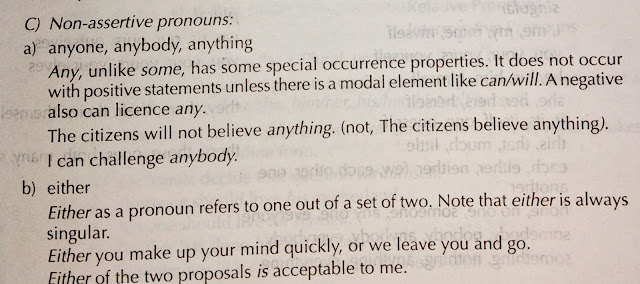
30.

31.

*'Either' is a distributive pronoun.
32.

*'Neither' is a distributive pronoun.

33. 

34. NUMERAL PRONOUNS

A numerical pronoun, either cardinal number (one, two) or and ordinal number (first, second) replaces noun and specifies a quantity of it in the form of a specific number. 

Function: It indicates how many of a group of people, places or things do or are something.


Examples: 46, three

1. There are 312 students in our college preparation program, 46 have part-time jobs.

2. All of the textbooks were returned to the resource room, but three are quite damaged.

3. Jane bought tomatoes, but two were bad.

4. The red car was first and the green car was second.

5. One will be enough.

Note: When a number is placed before a noun, it is a numerical adjective that describes the noun; example: Junior is in the second grade.


35.

36.


37.


38.


39.


40.

Monday, 21 February 2022

GRAMMAR : KINDS S OF NOUNS


Kinds of Noun

1.

2.


3.


4.


5. 


*zealotry = कट्टरपन. fanatical and uncompromising pursuit of religious, political, or other ideals; fanaticism.
*vagrancy = घुमक्कड़,आवारगी the state of wandering from place to place; having no permanent home or means of livelihood

6. 


7.


8.


9.


10. 


11.


12.


13.


14.


15. 


16.


A noun has Seven Basic types . That are as follows:


1. Common Noun


2. Proper Noun


3. Collective Noun


4. Material Noun


5. Abstract Noun


6. Countable Noun


7. Uncountable Noun


These are the Kinds of the Noun which completely detail are given below:


Common Noun

The name of any common Person, place or thing is called Common Noun.


Examples of the common Noun are:


 Bag, tree, chair , tree, boy etc are the examples of the common Noun.


Uses of Common Nouns in Sentences

1) The bag is on the table.


2) There are many plants in the garden.


3) I bought new book yesterday.


4) Students are playing in the field.


5)  That girl has a beautiful ring.


Proper Noun

The name of the specific person, place or thing is called Proper noun . It starts with a capital letter.


Examples of Proper noun


1)  Agra is Well-known for its historical importance.


2) Gandhiji is called the Father of the Nation.


3) Nisa is a beautiful girl.


4) New Delhi is the capital of India 


5) I recite the Bhagvat Gita every day.


Collective Noun

The name of persons or things which are taken together and spoken as a whole unit are called “Collective Noun”.


Examples


Examples of Collective noun are given below which are very important for more information about Collective Noun.


1) Indian Army is the bravest army.


2) The committee has passed the bill.


3) The jury found him guilty of murder.


4) Our team won the match.


5) The audience liked the film very much.


Countable Noun

The names of persons or objects which can be counted are called “countable noun”.


 In countable noun are those which can be counted like any persons and some other objects.


Examples


Some examples are given below for more information about countable noun:


1) There are nine ballpoints in my shirt.


2) A pen is powerful than sword.


3) Sparrows are flying in the sky.


4) How many cusions do you have?


5) I bought one dozen eggs from the market.


Uncountable Noun

The names of thing that cannot be counted in numbers is called Uncountable noun.


Some Examples are here of uncountable noun:


1) My mother gave me a good piece of advice.


2) Sugar prices are going too high day by day.


3) Unity is strength.


4) Her anger is too high .


5) He has long hair.


6) Juice is a refreshing drink.


Noun having different meaning in different numbers


1) For example force is a noun it has different meaning in different numbers like power, army.


2) Wood means timber and forest.


3) Air means wind but also airs means manners.


4) Physic mean medicine and also mean a branch of science.


And some other words Noun which having different meaning in different numbers.