Wednesday, 2 June 2021

FIGURES OF SPEECH IN MOV

 Act 1, Scene 2: 

1. Antithesis 

Little - great 

Body - world.

[6/2, 9:00 PM] Priyansu Personal: 1. Antithesis 

Little - great 

Body - world.

[6/2, 9:09 PM] Add Punyaslok"S Number: Sick - uneasy

[6/2, 9:10 PM] Add Punyaslok"S Number: Surfeit - Overfed

[6/2, 9:10 PM] Priyansu Personal: Abundance-- plenty

Aught -- many thing 

Sick-- to feel uncomfortable

[6/2, 9:11 PM] Add Punyaslok"S Number: That surfeit - Verbal metaphor

[6/2, 9:11 PM] Add Punyaslok"S Number: Surfeit - Starve - Antithesis and alliteration.

[6/2, 9:15 PM] Add Punyaslok"S Number: Line 7-8 - Pun 

( First mean - second mean )

[6/2, 9:15 PM] Priyansu Personal: Line 7 - Inversion

Line 7 - Litotes

Line 7-8 - Pun 

( First mean - second mean )

[6/2, 9:16 PM] Priyansu Personal: No mean - Not ordinary 

Seated in the mean - To be in the middle of being extremely wealthy or extremely poor.

[6/2, 9:19 PM] Priyansu Personal: Hairs are part for whole human beings.

[6/2, 9:20 PM] Priyansu Personal: Competency - Just enough

[6/2, 9:21 PM] Priyansu Personal: Live - Longer - Alliteration

[6/2, 9:22 PM] Priyansu Personal: White hairs - Lives longer - Antithesis

[6/2, 9:25 PM] Priyansu Personal: Good - well - Tautology 

Good sentences - Well pronounced - Climax.

[6/2, 9:30 PM] Priyansu Personal: Chapels - Churches - Climax and Alliteration

Poor man's cottage - Prince's Palaces - Climax and Alliteration 

Cottage - Palaces - Antithesis

[6/2, 9:38 PM] Priyansu Personal: It - He 

That - Who

[6/2, 9:38 PM] Priyansu Personal: Line 15 - 16 - He is a good divine who follows his own instructions.

[6/2, 9:41 PM] Priyansu Personal: Line 17 - Inversion

Teach - twenty - Alliteration

[6/2, 9:45 PM] Priyansu Personal: Metonymy

[6/2, 9:47 PM] Priyansu Personal: Brain - for mind 

Blood - for body

[6/2, 9:47 PM] Priyansu Personal: Hot temper - Metonymy

[6/2, 9:47 PM] Priyansu Personal: Hot temper - heat of desire

[6/2, 9:54 PM] Priyansu Personal: Cripple - Limping

[6/2, 9:59 PM] Priyansu Personal: Choose - refuse - Antithesis and Climax

[6/2, 9:59 PM] Priyansu Personal: Refuse - dislike - Tautology 

Act IV, scene 1


Saturday, 29 May 2021

FUN WITH ENGLISH GRAMMAR


1. i. a. A woman, without her man, is nothing!

b. A woman! Without her, man is nothing.

ii. a. Let's eat, our dear friends.

b. Let's eat our dear friends.

iii. a.  We paid twenty-five dollars. ( 25×75 =1875)

b. We paid twenty five-dollars. (20 × 5 = 100 × 75 = 7500)

iv. a. I am sorry I can't help you. (Feeling sad for my inability to help you)

b. I am sorry; I can't help you. (My refusal to help you)

v. a. Have you seen the man eating chicken?

b. Have you seen the man-eating chicken?

vi. a. I bought a hot-water bottle.

b. I used a hot water bottle on my swollen parts.

vii. a. This is a girl's hostel.

b. This is a girls' hostel.

viii. a. I draw pleasure in cooking, and selling, my friends.

b. I draw pleasure in cooking and selling my friends.

ix. a. I would like to thank my parents, Shubhra and Divya.

b. I would like to thank my parents, Shubhra, and Divya.

x. a. A Merry Christmas from the Patnaik's!

b. A Merry Christmas from the Patnaiks!

xi. a. I want to re-cover my sofa.

b. I want to recover my sofa.

xii. I saw a snake trekking, and some boys.

b. I saw a snake, and some boys trekking.

xiii. a. What are you Ram?

b. What! Are you Ram?

xiv. a. Why did the tiger devour the protagonist Mr. Chand?

b. Why did the tiger devour the protagonist, Mr. Chand?

Xiv. a. I can.

b. I can!

2.i. a. I would if I could.

b. I could if I would.

ii. a. I am going to come.

b. I am coming to go.

iii. a. I came to meet you.

b. I am glad to meet you. (While meeting)

c. I am glad to have met you.(While departing)

iv. a. He studies hard.

b. He hardly studies.

v.a. The P.M will tell the students shortly how to prepare for the Exams.

b. The P.M will tell the students briefly how to prepare for the Exams.

vi.a. I have drawn this picture.

b. I have this picture drawn.

vii. a. I am to solve these questions. (Already decided/arranged)

b. I  have to solve these questions. (Compelled)

viii.a. You have come late.

b. You have come lately.

ix.a. He goes to school daily.

b. He goes to the school daily.

x.a. She left for the office direct. (With no stop on the way)

b. She left for the office directly. (Immediately)

xi. a. He is only handsome.

b. Only he is handsome.

xii.a. X thinks little of Y.

b. X little thinks of Y.

xiii.a. He lost his only mobile.

b. He lost his mobile only.

c. Only he lost his mobile.

xiv. a. He seems to be rich.

b. He seems to have been rich.

xv.a. Who is she?

b. What is she?

c. Which is she?

xvi.a Is he going to watch the match?

b. Is he coming to watch the match?

xvii.a. Esha is the greatest poet.

b. Esha is the greatest poetess.

xviii.a. He shut the door upon his friend.

b. He shut the door against his enemy.

xix.a. She was a very charming girl.

b. She was a most charming girl.

c. She was the most charming girl.

d. She was too charming a girl.

xx.a. Today's class was of the first importance.

b.Today's class was of the last importance.

c. Today's class was of the least importance.

3. i. a. We saw a dead lion playing.

b. While playing, we saw a dead lion.

ii. a. Having bitten the child, the man killed the snake.

b. The snake having bitten the child, the man killed it.

iii. a. Running through the jungle, a lion leaped towards him.

b. While he was running through the jungle, a lion leaped towards him.

4. i. a. I, who is a great cricketer, lives in Mumbai.

b. I, who am a great cricketer, live in Mumbai.

ii. a. You, who is one of my best friends, has stood first in the Board Exams.

b. You, who are one of my best friends, have stood first in the Board Exams.

iii. a. This is not such a sweet mango which I had expected to be.

b. This is not such a sweet mango as/that I had expected to be.

iv. a. I was reading Tagore's poems, who was a great poet.

b. I was reading the poems of Tagore, who was a great poet.

v. a. The front chairs have been occupied by some ladies, that/which were reserved for the media persons.

b. Some ladies have occupied the front chairs , that were reserved for the media persons.

vi. a. All which glitters are not gold.

b. All, that glitters, is not gold.

vii. a. Something, which is spoken by the parents, is always worth listening.

b. Something, that is spoken by the parents, is always worth listening.

viii. a. What are you say!

b.What are you say?

5. i. a. You are so good as my friend.

b. You are as good as my friend.

Or, You are not so good as my friend.

ii. a. No batsman was as famous as Sachin.

b. No other batsman was as famous as Sachin.

iii. a. He plays better than me.

b. He plays better than I (do).

iv. a. Lata Mangeshkar is one of the sweetest singer the world has ever heard.

b. Lata Mangeshkar is one of the sweetest singers the world has ever heard.

v. a. This is the easiest sum I have never worked out.

b. This is the easiest sum I have ever worked out.

vi. a. Manisha is prettier than any girl in our college.

b. Manisha is prettier than any other girl in our college.

vii.a. Shylock was crueler than any other Jew.

b. Shylock was crueler than any Jew.

6. i. a I am as well as you are invited to the party.

b. I am as well as you am invited to the party.

ii.a. Neither of you are correct.

b. Neither of you is correct.

iii. a. Neither of the two was correct.

b. Neither of the three was correct.


Thursday, 27 May 2021

MONDELA'S CONCEPT OF A CHILD'S FREEDOM


MONDELA'S CONCEPT OF A CHILD'S 

FREEDOM

Every child has an appetite to be suckled its Mother's sweet, panacean Milk,

It has a hunger to relish green vegetables; ripe, succulent fruit and rich food, 

It has a desire to live in a cosy, well-furnished house; and wear satin or silk,

And, it has an aspiration to be given equal importance, and like others, to look good!

Every child has an inclination to leap in the pure dust of its holy country street,

It has a longing to splash gleefully the moving water at sunset on the golden shore,

It has an impulse to run with a dancing kite in the reaped corn fields with joy galore,

It has a craving to pluck wild nuts in the thick bushes chasing the butterflies that flit!

Every child pines for a right to be pampered by its grand parents, and told varied tales,

It yearns for a freedom to pray to the gods of its sole belief, and pursue a job of its choice,

It is eager for an free and fair access to elect its leaders who will never stifle its voice,

It looks for a liberty to wed someone with whom it feels confident to win life's Race!

Thus, until and unless a child enjoys its much beloved wishes, no country is free,

And, 'Freedom - a Modern Misnomer.' that everyone must heartily with me agree!

Misnomer - a wrong name

Copyright: Shankar D Mishra 27.05.21


*ଦୁଇଟି ସତ୍ୟ ଘଟଣା, ଯାହାକୁ ପଢ଼ିଲେ ଆପଣ ମଧ୍ୟ ଆପଣଙ୍କ ଜୀବନ ଜୀଇଁ ବାର ପଥ ବଦଳେଇବାକୁ ଚାହିଁବେ !*


*ପ୍ରଥମ*- 


*ଦକ୍ଷିଣ ଆଫ୍ରିକାର ରାଷ୍ଟ୍ରପତି ହେବା ପରେ ଦିନେ ନେଲସନ ମଣ୍ଡେଲା ନିଜର ସୁରକ୍ଷା କର୍ମୀଙ୍କ ସହିତ ସହରରେ ଥିବା ଏକ ଜଳଖିଆ ଦୋକାନକୁ ଖାଇବା ପାଇଁ ଗଲେ। ସମସ୍ତେ ନିଜ ନିଜର ପସନ୍ଦ ଖାଦ୍ୟ ଅର୍ଡର କଲେ ଏବଂ ଖାଇବା ପାଇଁ ଅପେକ୍ଷା କଲେ। ସେହି ସମୟରେ ମାଣ୍ଡେଲା ଙ୍କ ସିଟ୍ ସାମ୍ନାରେ ଜଣେ ବ୍ୟକ୍ତି ଖାଇବା ଅପେକ୍ଷାରେ ବସିଥାନ୍ତି। ମାଣ୍ଡେଲା ନିଜର ସୁରକ୍ଷା କର୍ମୀଙ୍କୁ କହିଲେ, ସେହି ବ୍ୟକ୍ତି ଙ୍କୁ ମଧ୍ୟ ଆମ ଟେବୁଲକୁ ଡ଼ାକ। ଏହିପରି ହିଁ ହେଲା। ଖାଦ୍ୟ ପରସା ହେଲା ପରେ ସମସ୍ତେ ଖାଇବାକୁ ଲାଗିଲେ। କିନ୍ତୁ ସେହି ବ୍ୟକ୍ତି ଖାଇବା ସମୟରେ ତାଙ୍କର ହାତ ବହୁତ ଥରୁଥିଲା ଦେଖିବାକୁ ମିଳିଲା। ଖାଇବା ସାରି ବ୍ୟକ୍ତି ଜଣକ ମୁଣ୍ଡ ଝୁକାଇ ରେସ୍ତୋରାଁ ରୁ ଚାଲିଗଲେ। ସେ ଲୋକ ଚାଲିଯିବା ପରେ ସୁରକ୍ଷା କର୍ମୀମାନେ ମାଣ୍ଡେଲା ଙ୍କୁ କହିଲେ, ବ୍ୟକ୍ତି ଜଣକ ବହୁତ ବିମାରୀ ଥିଲେ, ଯାହା ଫଳରେ ଖାଇବା ସମୟରେ ତାଙ୍କର ହାତ ଲଗାତାର କଂପି ଉଠୁଥିଲା, ଆଉ ସେ ନିଜେ ମଧ୍ୟ ଥରୁଥିଲେ। ମାଣ୍ଡେଲା କହିଲେ, ନାଁ ପ୍ରକୃତରେ ଏପରି ନୁହେଁ। ଏହି ବ୍ୟକ୍ତି ସେହି ଜେଲ୍ ର ଜେଲର ଥିଲେ, ଯେଉଁଠି ମୋତେ ବନ୍ଦି କରି ରଖାଯାଇଥିଲା। ଯେତେବେଳେ ମୋତେ ପୀଡ଼ା ଯାତନା ଦିଆଯାଇଥିଲା,ଆଉ ମୁଁ ବିକଳରେ ପାଣି ମାଗୁଥିଲି, ସେତେବେଳେ ଏହି ବ୍ୟକ୍ତି ମୋ ଉପରେ ପରିସ୍ରା କରୁଥିଲା।*


*ନେଲସନ ମଣ୍ଡେଲା କହିଲେ, ମୁଁ ଏବେ ରାଷ୍ଟ୍ରପତି ହୋଇଯାଇଛି, ସେ ଭାବିଲା ବୋଧହୁଏ ମୁଁ ତା' ସହିତ ସେପରି ବ୍ୟବହାର କରିବି। କିନ୍ତୁ ମୋର ଚରିତ୍ର ସେପରି ନୁହେଁ। ମୋତେ ଲାଗୁଛି, ପ୍ରତିଶୋଧ ପରାୟଣ ଭାବନାରେ କାର୍ଯ୍ୟ କଲେ ତାହା ବିନାଶ ଆଡ଼କୁ ନେଇଯାଇଥାଏ,, କିନ୍ତୁ ସେହିଠାରେ ଧର୍ଯ୍ୟ ଏବଂ ସହିଷ୍ଣୁତାର ମାନସିକତା ଆମକୁ ବିକାଶ ଆଡ଼କୁ ନେଇଯାଇଥାଏ।*


*ଦ୍ଵୀତୀୟ-*


*ମୁମ୍ବାଇରୁ ବାଙ୍ଗାଲୋର ଯାଉଥିବା ଟ୍ରେନ ରେ ଯାତ୍ରା କରୁଥିବା ସମୟରେ T C ଟିକେଟ ଚେକ୍ କରୁଥିବା ସମୟରେ ସିଟ୍ ତଳେ ଲୁଚିରହିଥିବା ଜଣେ ୧୩/୧୪ ବର୍ଷର ଝିଅକୁ ଦେଖିଲେ, ଏବଂ ତାକୁ କହିଲେ-*


*TC- ଟିକେଟଦେଖାଅ ?*

*ଭୟରେ ଥରୁଥିବା ଝିଅ- ନାହିଁ ସାହେବ୍।*

*TC- ତେବେ ଗାଡ଼ିରୁ ଓହ୍ଲେଇ ଯା...*


*ତା'ର ଟିକେଟର ମୂଲ୍ୟ ମୁଁ ଦେଉଛି... ପଛରେ ବସିଥିବା ଜଣେ ସହଯାତ୍ରୀ ଊଷା ଭଟ୍ଟାଚାର୍ଯ୍ୟ କହିଲେ। ଯିଏ ପେଶାରେ ଜଣେ ପ୍ରଫେସର ଥିଲେ।*


*ଉଷା ଦେବୀ- ତୁମେ କେଉଁଠିକୁ ଯିବ?*

*ସେ ଝିଅ- ଜାଣି ନାହିଁ ମାମ୍।*

*ଉଷା ଦେବୀ- ତେବେ ମୋ ସହିତ ବାଙ୍ଗାଲୋର ପର୍ଯ୍ୟନ୍ତ ଚାଲ।*

*ଉଷା ଦେବୀ- ତୁମ ନାଁ କ'ଣ?*

*ଝିଅ- ଚିତ୍ରା*


*ବାଙ୍ଗାଲୋର ପହଞ୍ଚିବା ପରେ ଉଷା ଦେବୀ ନିଜର ଜଣାଶୁଣା ଏକ ସ୍ବୟଂ ସେବୀ ସଂସ୍ଥା ରେ ରଖିଦେଲେ। ଏବଂ ଏକ ବଡ଼ ସ୍କୁଲ ରେ ଆଡ଼ମିଶନ କରାଇ ଦେଲେ। ଏହା ପରେ ଉଷା ଦେବୀ ଙ୍କର ଦିଲ୍ଲୀ ଟ୍ରାସଫର୍ ହୋଇ ଗଲା। ଯେଉଁଥିପାଇଁ ଚିତ୍ରା ସହିତ ସଂପର୍କ ମଧ୍ୟ ଦୂରେଇ ଗଲା, କିନ୍ତୁ ମଝିରେ ମଝିରେ ଫୋନ୍ ରେ କଥା ହୁଅନ୍ତି।*


*ପାଖାପାଖି ୧୨ ବର୍ଷ ପରେ ଉଷା ଦେବୀଙ୍କୁ ଏକ ଲେକଚର୍ କାର୍ଯ୍ୟକ୍ରମ ରେ ଫ୍ରାନ୍ସିସ୍କୋ, ଆମେରିକା ନିମନ୍ତ୍ରଣ କରାଯାଇଥିଲା। ଲେକଚର୍ କାର୍ଯ୍ୟ କ୍ରମ ପରେ ସେ ଯେତେବେଳେ ହୋଟେଲ ରେ ବିଲ୍ ପୈଠ କରିବା ପାଇଁ ରିସେପସନ୍ କୁ ଗଲେ,ଜଣା ପଡ଼ିଲା ଯେ ପଛରେ ଠିଆ ହୋଇଥିବା ଏକ ସୁନ୍ଦର ଦମ୍ପତ୍ତି ପୂର୍ବରୁ ସେ ବିଲ୍ ପୈଠ କରି ସାରିଛନ୍ତି।*


*ତୁମେ ମୋର ବିଲ୍ କାହିଁକି ପୈଠ କଲ?*

*ମ୍ୟାମ୍ ଏହା ବାଙ୍ଗାଲୋର ରୁ ମୁମ୍ବାଇ ପର୍ଯ୍ୟନ୍ତ ଟ୍ରେନ ଟିକେଟ ସାମ୍ନାରେ କିଛି ବି ନୁହେଁ।*


*ଉଷା ଦେବୀ- ଆରେ ଚିତ୍ରା...*


*ଚିତ୍ରା ଆଉ କେହି ନଥିଲା , ସେ ଇମ୍ଫୋସିସ୍ ଫାଉଣ୍ଡେସନର ଚେୟାରମେନ ସୁଦ୍ଧା ମୂର୍ତ୍ତି ଥିଲେ,ଯିଏ କି ଇମ୍ଫୋସିସ୍ ର ସଂସ୍ଥାପକ ଶ୍ରୀ ନାରାୟଣ ମୂର୍ତ୍ତି ଙ୍କର ଧର୍ମ ପତ୍ନୀ।*


*ଏହି ଲଘୁକଥା ଟି ତାଙ୍କ ଦ୍ଵାରା ଲେଖାଯାଇଥିବା ପୁସ୍ତକ"The day I stand drinking milk" ରୁ ଉଦ୍ଧାର କରାଯାଇଛି।*


*କେବେ କେବେ ଆପଣଙ୍କ ଦ୍ଵାରା କାହାକୁ କରାଯାଇଥିବା କିଛି ସହାୟତା,କାହାର ଜୀବନ ବଦଳେଇ ଦେଇପାରେ। ଯଦି ଜୀବନରେ କିଛି ଅର୍ଜନ କରିବାର ଅଛି ତ ପୁଣ୍ୟ ଅର୍ଜିତ କର, କାହିଁକି ନା ଏହା ହିଁ ହେଉଛି ଏକ ମାତ୍ର ମାର୍ଗ ଯାହା ମୋକ୍ଷ ପର୍ଯ୍ୟନ୍ତ ନେଇ ଯାଉଥାଏ...*


*ସର୍ବଦା ପ୍ରସନ୍ନ ରୁହନ୍ତୁ ଏବଂ ମନେ ରଖନ୍ତୁ- ଯାହା ପ୍ରାପ୍ତ ଅଟେ ତାହା ପର୍ଯ୍ୟାପ୍ତ ଅଟେ। ଯାହାର ମନ ମସ୍ତ ଅଟେ ତାହା ପାଖରେ ସମସ୍ତ ଅଟେ*


*🌹*

N.B Coincidentally I received a whatsapp message on Nelson Mandela the very next day, i.e today just after I composed the poem on him a day after, i.e yesterday, 27.5.21


Tuesday, 18 May 2021

PAGE 202 to 250, SDM'S KEY TO B. N. ACHARYA'S STRUCTURAL APPROACH TO TRANSLATION, BOOK -2


PAGE 202 to 251


Page 202/203 EXERCISE: (XX)

Morning approached. /The day dawned.

The street lights were switched off.

Having got up from the bed, Madhu finished his morning chores/duty.

He had to set out for Kolkata that day.

Having had his tiffin, he put on dress.

At this time his teacher sent for him.

He said, “Madhu, you will carry out my orders.

You will always take care of your health.

If ever you fall ill, you will immediately call in a doctor.

I am waiting for you till you come.”

Madhu came back from the teacher.

Then, she set out for Kolkota with her friends.


Page 203  

 MISCELLANEOUS EXERCISES (1)


There was a king in a country.

Once having called his minister he said, “O Minister, I will go to hunt tomorrow.

Order the soldiers to go with me.

The minister replied, “O great King, there are many tigers and elephants in our jungle.

So, you should not go to the jungle.

Let the soldiers go to the jungle.

Having killed a deer, they will bring here for you.”

Having heard this, the king said, “Let it be so.

I need not go.

But, let no one call me a coward for that.”


Page 204 (2)


The Sikhs live in Punjab.

They are very brave and hard working.

They love to work the whole day long, and they eat milk and bread.

We should work hard like them.

There are many big shops in Punjab.

The lands are very fertile there.

The farmers grow three crops there.

So, they live happily.

Wheat and milk is better than rice and dal.

They eat wheat and milk more.

Hence, the Punjabis are stronger.


Page 204/205 (3)


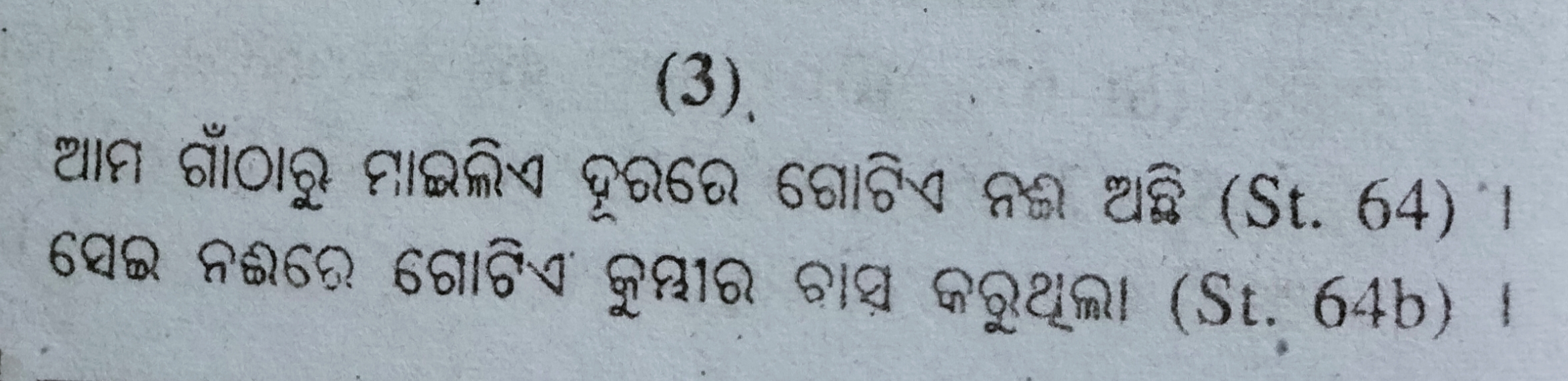
There is a river a mile away from our village.

There was a crocodile living in that river.

Or, A crocodile living in that river.

Or, There lived a crocodile in that river.

There was a monkey in a mango tree on the bank of the river.

The monkey and crocodile were friends.

The monkey used to give ripe mangoes to the crocodile to eat.

Having eaten those sweet mangoes the crocodile lived happily.

One day the crocodile thought,  "This monkey is eating sweet mangoes everyday.

So its flesh must have been very sweet.

I will try to kill it today."

Having thought this he went to the monkey.

However, the monkey was more intelligent than the crocodile.

Having seen the crocodile coming towards him, he ran away from there/ from that place.


Page: 205/206 (4)


A gentleman had four sons.

They used to quarrel/fall out among themselves.

Having noticed this he felt so sad, and thought of a plan.

He had a faithful servant named Madana.

He asked him to bring a bundle/faggot of sticks.

Having brought the bundle Madana placed/put it down.

He ordered his sons to break the bundle.

Having got the orders of their father, all the sons tried to break the bundle.

But, no one could break the bundle.

Having seen that the gentleman said to his sons, "See, if you live together no enemy can do you any harm."

Page: 206/207 (5)


Rana Pratap was a great hero.

He fought with Akbar for a long period of time.

Though Akbar had taken away his kingdom, he could not control him.

He had a horse named Chaitak.

Once while running away from the battlefield of Haldighat, Chaitak fell down and died.

The soldiers of Akbar ran after Rana.

Pratap could not decide what to do.

At this time another person reached there.

He was Pratap's brother.

He gave Pratap his horse.

Have fled the place Rana saved his life.

Page: 207 (6)


The cow is a four-footed/quadruped domestic animal.

She gives us cheese, butter and curd from milk.

The poor people use the cow dung as fuel.

But, this is a good manure.

The cow is an intimate friend of the farmers.

In the past the Hindus were worshipping the cow as God.

But, we don't know how to take care of the cow.

So, the cows of Odisha do not give milk well.

We should look upon the cow as our best wealth.

Page: 208 (7)

Water is our life. 

We cannot live at all without water.

We take bath with water as well as drink it.

The trees and the creepers always depend upon water.

So God has kept (stored) water everywhere for us.

This water comes from the rain.

When it rains, the ponds, pools, rivers and drains get filled with water.

At that time we drink much water.

In rainy season the water of the rivers and the ponds gets muddy, however in autumn water becomes clear everywhere.

Page: 209 (8)

Have you ever seen a ghost?

Perhaps none of you have ever seen a ghost, but you have surely heard a lot of ghost stories.

Many people are very much afraid/scared of ghosts.

That is not at all right.

Some say that there are no ghosts at all.

Some say that ghosts do not inhabit the residences of men.

And some others think that the world is full of ghosts.

Then which view is right?

Thus, do follow me. Or, Thus, listen to my advice.

Don't get frightened/scared having heard the ghost stories/having heard the stories about ghosts.

Page: 210 (9)

It good to talk less.

One should not talk much.

Mad men always talk.

We waste a lot of energy by talking much unnecessarily.

Gandhiji used to maintain/observe silence every Sunday.

The strength/power of the mind increases/ grows by silence.

So, instead of talking one should sit silently for a while/ for some time.

In the ancient times the Rishis loved to sit in silence in lonely places.

So their ashrams were away from the noise of men.

But, now a days no place is calm and quiet.

At present, even if you wish, it is difficult to sit in silence.

Page: 212

The boy is intelligent.

Dillip Tirki is a popular Hockey player.

The Chinese are very industrious.

The tree provide us with oxygen.

The cow lives on grass.

Giving/To give advice is easy.

The horses are grazing in the field.

Indrani is a Classical singer.

I have not cooked for you.

Can you guess the answer?

Page 212

Wind blows.

Ram plays cricket.

Sita sings well.

We should obey our parents.

It has been raining for two hours.

The jungles of Odisha are filled with elephants.

A little girl is walking along the road.

The curry smells bad.

Iron is a heavy metal.

Gandhi is called the father of the Nation.


Page 213

What is the problem?

The bell is ringing./ There goes the bell.

The kite flew up.

What are you doing? / What are you?

How tall the building is?

How is your son studying? /How is your son faring in his studies?

Have you seen Konark?

Who is the Headmaster?

What happened?

What brings you here?

Why are you worried?

Is your brother a lawyer?

Why are you laughing? What makes you laugh?


Page 214

Please listen.

Keep quiet. / Maintain silence.

Don’t disturb.

Don’t go there.

Book the ticket in advance.

Put out the light.

How foolish!

Please give a cup of tea.

How tall the building is!

What a nice book!

Post the letter.

Refer to the dictionary.

Please help me.

Drive him away.

How clever he is! 

,............ 19.8.23

Page 223

1. ଲୁସି କେତେ ସୁନ୍ଦର ନାଚୁଛି । 2. କେଡ଼େ ଚତୁର ବାଳକ ସେ ! 3. ସମୟ କେଡ଼େ ଚଞ୍ଚଳ ଯାଉଛି ! 4. କେଡ଼େ ସୁନ୍ଦର ଗାୟକ ସେ ! 5. ଲୁଣ ବଢ଼େଇ ଦିଅ । 6. ଦୟାକରି ଆଉ କପେ ଚା’ ନିଅନ୍ତୁ । 7. ଆମ ପ୍ରତି ଦୟା କର । 8. ଚାଲ, ବୁଲିବାକୁ ଯିବା । 9. ତୁମ ପ୍ରଧାନଶିକ୍ଷକ କେଉଁଠି ରହନ୍ତି ? 10. ମିରା କାହିଁକି ଅନେକ ଦିନ ବିଦ୍ୟାଳୟରେ ଅନୁପସ୍ଥିତ ଥୁଲା ? 11. କମଳା ଭଲ ଗୀତ ବୋଲେ କି ? 12. ତୁମ ଜେଜେ ମାଂସ ଖାଆନ୍ତି କି ? 13. ମିତାଲିର ଛୋଟ ଛୋଟ କେଶ ଅଛି । 14. ତା’ ଆଖ୍ ଦୁଇଟି ନୀଳ । 15. ବୃଦ୍ଧ ଦମ୍ପତ୍ତି ସର୍ବଦା ଖୁସି ।

1. How beautifully Lucy dances! 2. What a clever/witty boy he is! 3. How fast time moves! 4. What a wonderful singer he is! 5. Do pass the salt. 6. Please have one more cup of tea. 7. Be kind to us. 8. Let's go for an outing. 9. Where does your Headmaster live? 10. Why had Meera been absent from school for a long time? 11. Does Kamala sing well? 12. Does your Grandfather eat meat? 13. Mitali has short hair. 14. Both of her eyes are blue. 15. The old couple are always happy.

Page 226

ମୁଁ ଜଣେ ଛାତ୍ର । ମୁଁ ଅଲଣାହାଟ ହାଇସ୍କୁଲର ନବମ ଶ୍ରେଣୀରେ ପଡ଼େ । ମୋ ଭାଇ ଅନିଲ୍ । ତା’ର ଏକ ସାଇକେଲ ଅଛି । କିନ୍ତୁ ତା’ ସାଙ୍ଗର ନାହିଁ । ମୁଁ ମୋ ଘରପଢ଼ା ପ୍ରତିଦିନ କରେ, କିନ୍ତୁ ସେ ନିୟମିତ କରେ ନାହିଁ । ସେ ଖେଳକୁଦରେ ଦକ୍ଷ । ତୁମେ ତା'କୁ ଜାଣ କି ? 

I am a student. I study in class IX in Alanahat High school. My brother is Anil. He has got a cycle. But, his friend hasn't. I always do my homework, but he doesn't do it regularly. He is skilled at sports and games. Do you know him?

Page 226/227

ମଧୁ – ତୁମେ ଆଜି ଛାତ୍ରାବାସ ଛାଡୁଛ କି?

ରାଜୁ – ହଁ, ଆଜି ମୋ ଛାଡ଼ିବା ଦିନ ।

ମଧୁ – ତୁମ ଗାଁରେ ପହଞ୍ଚିବାକୁ ତୁମକୁ କେତେ ସମୟ ଲାଗିବ?

ତୁମ ଗାଁ ନାମ କ’ଣ ?

 ରାଜୁ – ମୁଁ ଜାଣେ ନାହିଁ ମୁଁ କେତେବେଳେ ପହଞ୍ଚିବି । ଆମ ଗାଁ ନା ଗାରୋହି । ବସ୍ ପହଞ୍ଚିବା ସମୟ ଠିକ୍ ନୁହେଁ ।

Are you leaving hostel today? Yes, today is the day of my departure. How long will it take to reach your village ? Where are you from ? I don't know when to arrive. I am from Garohi. There is no fixed time for the bus to arrive.

Page 227

ସେ ଆସନ୍ତାକାଲି ଘରକୁ ଯିବ । ଓଟ ଓଜନିଆ ବୋଝ ବୋହିପାରେ । ସ୍ତ୍ରୀଲୋକଟି ଝାଡୁରେ ଘର ପହଁରୁଥିଲା । ମୁଁ କେବେ କୋଲକାତା ଯାଇନାହିଁ । ତୁମେ କେବେ କାଶ୍ମୀର ଯାଇଛ କି ? ବିଦ୍ୟାଳୟକୁ ଠିକ୍ ସମୟରେ ଯିବା ଉଚିତ୍ । ସେ ପିଲାବେଳେ ଭଲ ଗୀତ ବୋଲୁଥିଲା । ଆମେ ଆମ ବାପମାଙ୍କ କଥା ମାନିବା ଉଚିତ୍‌ । ତୁମେ ଏକଥା କହିବାକୁ କିପରି ସାହସ କରୁଛ ? ଆମେ ଆମ କର୍ତ୍ତବ୍ୟ କରିବା । ସେ ଆମଙ୍କୁ ଚାହିଁ ହସୁଥିବ । ଆମ ଶ୍ରେଣୀ କୋଠାରୀ କାଲି ସୁଦ୍ଧା ପରିଷ୍କାର ହୋଇଥବ। 


Hints : ମୁଁ ଘରକୁ ଯିବି – I am going home tomorrow, ଓଟ – The camel, ବହିପାରେ – can carry, ଓଜନିଆ ବୋଝ – heavy load, ଝାଡ଼ୁ – broom, ପହଁରୁଥିଲା – — was sweeping, କେବେ ଯାଇନାହିଁ – ମୁଁ have never been, ତୁମେ କେବେ ଯାଇଛି ? – Have you ever been ?, ଯିବା ଉଚିତ — should go, ମାନିବା ଉଚିତ – should obey, ତୁମେ ଏକଥା କହିବାକୁ କିପରି ସାହସ କରୁଛ ? – How dare you say ୫୦ ?, ଆମେ ଆମ କର୍ତ୍ତବ୍ୟ କରିବା – We must do our duty, ସେ ଆମଙ୍କୁ ଚାହିଁ – She could have been laughing at us,

ଆମ ଶ୍ରେଣୀ କୋଠରୀ କାଲି ସୁଦ୍ଧା ପରିଷ୍କାର ହୋଇଥିବ room will have been cleaned by tomorrow. Our class- ଅନୁବାଦ କର


-


ଅନିଲ ଓ ଚିନୁ ଦ୍ରୁତ ଗତିରେ ଦୌଡ଼ନ୍ତି; କିନ୍ତୁ ବୀଣା ନୁହେଁ । କାହାର ଲମ୍ବା ବାଳ ଅଛି ? ବୀଣାର ଲମ୍ବା ବାଳ ଅଛି । କିଏ ପୋଖରୀରେ ପହଁରନ୍ତି ? ଅନିଲ ଓ ଚିନୁ ପୋଖରୀରେ ପହଁରନ୍ତି; କିନ୍ତୁ ବୀଣା ନୁହେଁ । କିଏ ସହରରେ ଜନ୍ମ ହୋଇଥିଲା ? ଅନିଲ ଓ ବୀଣା ସହରରେ ଜନ୍ମ ହୋଇଥିଲେ; କିନ୍ତୁ ଚିନ୍ହ ନୁହେଁ । କେଉଁମାନଙ୍କର ଅଧିକ ସାଙ୍ଗ ଅଛନ୍ତି ? ବୀଣା ଓ ଚିନୁର ଅଧିକ ସାଙ୍ଗ ଅଛନ୍ତି; କିନ୍ତୁ ଅନିଲର ନୁହେଁ । କିଏ ମଟରସାଇକେଲ ଚଢ଼େ ? ଅନିଲ୍ ମଟରସାଇକେଲ ଚଢ଼େ; କିନ୍ତୁ ବୀଣା ଓ ଚିନୁ ନୁହନ୍ତି ।


ମୁଁ ବିବେକକୁ ଦିନସାରା ଦେଖୁନାହିଁ । ସେ ଏଠାକୁ ସକାଳୁ ଆସିନାହିଁ । ଗାଈ ଘାସ ଖାଏ । ଗୋରୁ ଘାସ ଖାଆନ୍ତି । ଶିକ୍ଷକ ଓ ଛାତ୍ରମାନେ ଶ୍ରେଣୀ କୋଠାରୀରେ । ଶିକ୍ଷକ ପଢ଼ାଉଛନ୍ତି । ମୁଁ ଶ୍ରେଣୀରେ ମନଯୋଗୀ । ପ୍ରଧାନଶିକ୍ଷକ ଶିକ୍ଷକମାନଙ୍କ ସଭାରେ ସଭାପତିତ୍ବ କରୁଛନ୍ତି । ମୁଁ ତାଙ୍କୁ ମୋଟେ ଜାଣି ନାହିଁ ।


Hints:

1. Anil and Chinu run fast; but Bina doesn't.

2. Who has got long hair ? Bina has got.

3. Who swims in the pond? Anil and Chinu swim in the pond; but Bina doesn't.

4. Who was born in a city? Anil and Bina were born in a city; but Chinu wasn't.

5. Who have many friends ? Bina and Chinu have many friends; but Anil hasn't. 

6. Who rides a motor bike ? Anil rides a motor bike: but Bina and Chinu don't have.


ଦିନସାରା – throughout the day

ଦେଖୁନାହିଁ – have not seen

Copyright: Dr. Shankar D Mishra, Bhubaneswar, Odisha, India.


N. B. To read the rest of the translations written by B. N. Acharya, search on Google "SDM'S KEY TO STRUCTURAL APPROACH TO TRANSLATION, BOOK -1 or 2 or 3", and topic wise Grammar rules by Dr. Shankar D Mishra 

Please share the links to your friends and relatives to help them know all the answers of the translations at home. You can give your valuable suggestions and corrections for the inadvertently committed errors to me through my WhatsApp number 8270604524. Thank you. 🙏🌹❤️❤️